 Login
Login


Filed under: Government/Legal,Motorsports,Cadillac,GM

Liberty Media confirms Justice Department investigation over Andretti-Cadillac F1 bid originally appeared on Autoblog on Thu, 8 Aug 2024 21:55:00 EDT. Please see our terms for use of feeds.
Permalink | Email this | Comments
Filed under: Government/Legal,Green,Alternative Fuels,Emissions,Ethanol,Fuel Efficiency,Driving,Gas Prices

It's not just Big Oil: A look at Big Corn, which is also suing over EPA emissions rules originally appeared on Autoblog on Thu, 27 Jun 2024 13:50:00 EDT. Please see our terms for use of feeds.
Permalink | Email this | Comments
Filed under: Government/Legal,Green,Emissions,Ethanol

Continue reading Oil and corn groups team up against Biden's tailpipe emissions rules
Oil and corn groups team up against Biden's tailpipe emissions rules originally appeared on Autoblog on Tue, 18 Jun 2024 10:00:00 EDT. Please see our terms for use of feeds.
Permalink | Email this | Comments
Filed under: Government/Legal,Green,Emissions,Truck,SUV,Electric,Hybrid
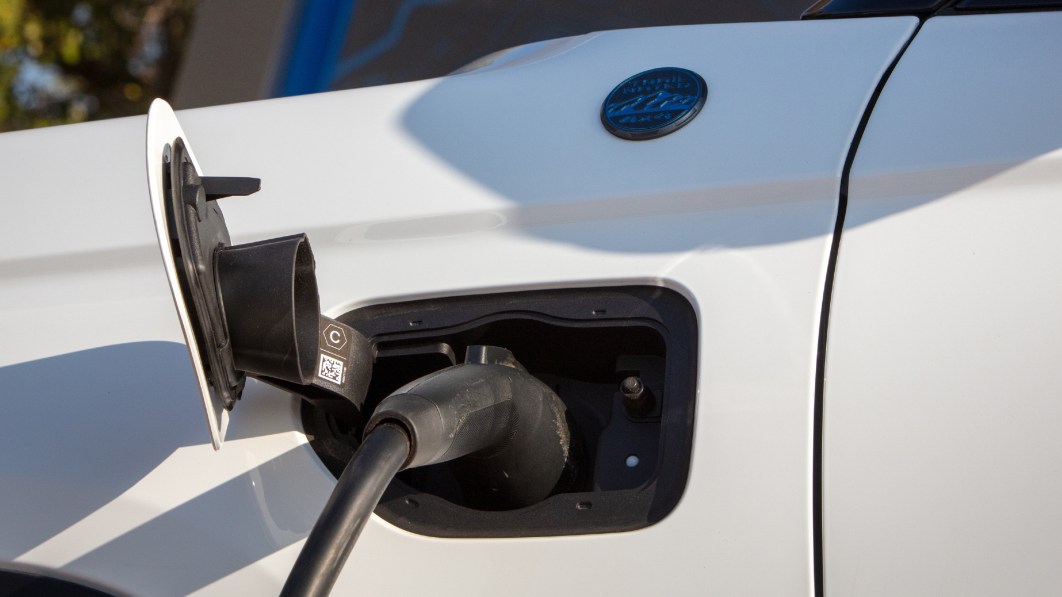
Continue reading Plug-in polluters? How Biden's emissions rules go soft on hybrid trucks, SUVs
Plug-in polluters? How Biden's emissions rules go soft on hybrid trucks, SUVs originally appeared on Autoblog on Sat, 8 Jun 2024 08:00:00 EDT. Please see our terms for use of feeds.
Permalink | Email this | Comments
Filed under: Government/Legal,Green,Emissions,Fuel Efficiency

Real-world mileage standard for new vehicles rising to 38 mpg in 2031 under new Biden rule originally appeared on Autoblog on Fri, 7 Jun 2024 14:57:00 EDT. Please see our terms for use of feeds.
Permalink | Email this | Comments
Winter storms can be unpredictable, and sometimes dangerous — especially if you’re driving. Before you hit the road this winter, here are a few tips on how to prepare for inclement weather and what to do if you need to survive a night in your car.
In general, it’s best to stay off the road when severe winter weather is predicted. It may sound harrowing, but about 70 percent of winter weather-related injuries occur in an automobile, and about 25 percent of injuries happen to people caught out in a storm, National Severe Storms Laboratory (NSSL) reports. According to Ready.gov, the cold of a winter storm can increase the risk of frostbite and hypothermia. Combating the rain, snow, wind and ice could lead to overexertion from shoveling snow and car accidents due to dangerous driving conditions.
In addition to paying attention to weather reports on TV, radio and the internet, Ready.gov suggests making sure your cellphone is set up to receive wireless emergency alerts. Weather alerts, which are part of the Integrated Public Alert and Warning System, are similar to text messages and notify you of serious weather conditions and recommended actions. You can also tune into your local NOAA Weather Radio station for continuous weather broadcasts, official watches, warnings and more.
It’s generally a good idea to winterize your car every year before winter weather rolls around. A tune up, properly inflated tires, new windshield wiper blades and topped-off fluids may help prepare your car for the lower temperatures and help it better handle inclement weather. And it’s a good idea to keep a fully stocked winter emergency kit in your car, just in case. Some items to include are:
However, an emergency kit and winterizing your vehicle don’t guarantee safety in a storm. If your area is under a winter storm warning, it is best to stay off the road. If you’re already on the road, seek shelter right away if inclement weather is approaching and driving conditions are expected to be hazardous. You may also want to share information about your trip before you leave. Tell a friend or family member your destination, your planned route and when you expect to arrive, recommends the American Red Cross. That way, if your vehicle gets stuck, they will know where to tell the authorities to send help.
If you’re stuck in your car and immobile, you’ll typically have a better chance of being found if you remain with your car — which may also provide the best shelter from the elements. Here are some important tips to help you survive the night.
Even if you’re unsure if the situation is a true emergency, 911.gov recommends dialing 911.
After you’ve called for help, stay in your vehicle and wait, says the Red Cross. Do not leave the car, as blowing snow may cause you to become disoriented and lost.
While you wait for help or wait out the storm, the American Red Cross suggests signaling that you need help. For example, raise the hood after the snow stops falling or, if you have a radio antenna, add a piece of colored fabric, preferably red, to it. Weather.com recommends turning on your hazard lights, and you may also want to set out reflectors from your emergency kit.
Inside the car, do light exercises — such as moving your arms and legs, and clapping your hands — to maintain circulation. If another person is in the car with you, huddle for warmth. Use extra layers, such as removable floor mats or even a paper map, to help trap more body heat, the American Red Cross advises.
You can also run the engine for about 10 minutes every house to keep warm, says the Red Cross. Only run the engine for short amounts of time and ensure that the exhaust pipe is clear of snow to help reduce the risk of carbon monoxide poisoning.
This will help you avoid dehydration, which makes you more susceptible to the potential health hazards of cold weather, according to the American Red Cross. The Colorado Department of Transportation recommends keeping a gallon of water in your vehicle.
Hopefully you stay safe and warm during a winter storm, but it’s always a good idea to be ready, just in case. With these tips, you can better prepare for handling a winter storm and surviving a cold night in your car.
Originally published on November 3, 2016.
The post How to Survive a Winter Night in Your Car appeared first on The Allstate Blog.
For newer vehicles, particularly German makes, manufacturers are increasingly ditching the transmission dipstick in favor of electronic oil level monitoring. Others may employ a fluid level plug hole on the bottom of the pan.

2013 Ford Fusion transmission oil leveling plug hole. (Courtesy Ford Motor Co.)
In other cases, such as the 2009 Suzuki Equator, the transmission oil dipstick exists but it’s not easy to find! First, it is not a traditional dipstick, sticking out where you can see it. It is a plug with a mounting bolt — you’d never know it is there. Often the owner’s manual will show the location of the dipstick, if one exists.
Today’s vehicles have longer maintenance intervals, and the emphasis is on keeping the system sealed to avoid the damage that debris, the wrong oil, and even air and moisture can wreak. In exchange, with electronic oil level monitoring, issues may arise when varnishing reduces the effectiveness of an in-sump sensor, for example.
1. Use the correct fluid – Non-recommended fluids can cause erratic shifts, slippage, abnormal wear, and eventual failure, due to fluid breakdown and sludge formation.
2. Cleanliness – Wipe the dipstick cap and fill tube clean before checking fluid level. Dirt, grease, and other foreign material on the cap and tube could fall into the tube, if not removed beforehand. Use a clean funnel when adding fluid.
3. Incorrect fluid level – A low fluid level allows the pump to take in air along with the fluid. Air in the fluid will cause fluid pressures to be low and develop slower than normal. If the transmission is overfilled, the gears churn the fluid into foam. This aerates the fluid and causes the same conditions occurring with a low level. In either case, air bubbles cause fluid overheating, oxidation, and varnish buildup which interferes with valve and clutch operation. Foaming also causes fluid expansion which can result in fluid overflow from the transmission vent or fill tube. Fluid overflow can easily be mistaken for a leak if inspection is not careful. (via Chrysler)
4. Transmission fluid additives, treatments or cleaning agents – may affect transmission operation and can result in damage to internal transmission components.
5. When to check – Your transmission is not designed to consume fluid. However, check the fluid level if the transmission is not working properly, (eg, if the transmission slips or shifts slowly) or if you notice some sign of fluid leakage.
Planning to service or repair your vehicle? Chilton can help! Access procedures, specifications, tips, and more at ChiltonDIY.com.
Undoubtedly, the transcontinental record posted last year will not stand for long, as there are probably teams of people right now plotting their strategy to traverse the country in less time. They will certainly achieve this with new routes, higher speeds, and/or better luck. Throughout the history of transcontinental travel, the limitations on closing the time gap was technology and the infrastructure: Wagons, trains, motorcycles, and cars traveled across everything from the barren wastelands of the Southwest to pristine asphalt freshly laid west.
The very nature of the automobile and railroad industry may change the environment of future attempts, as technology and the imagination of engineers and scientists endeavor to create safe, faster, and better travel. Autonomous vehicles, magnetic levitating (Maglev) bullet trains, and commercial airplanes complete with auto pilot, are the future. Imagine riding in a car that is capable of sensing its environment and navigating without human input; what’s more, imagine being surrounded by like vehicles. Perhaps the highways of the near future will be dominated by such cars and trucks that can run at high speeds for long durations in close formations, hampered neither by traffic, speed laws, or fuel constraints.

2016 Mercedes S Class autonomous features
For example, the 2016 Mercedes S-Class has options for autonomous steering, lane maintaining functions, acceleration/braking, parking, accident avoidance, and driver fatigue detection, in both city traffic and highway speeds of up to 124 mph. With adaptive cruise control (monitors distances to adjacent vehicles in the same lane, adjusting the speed with the flow of traffic) it has the earmarks of a completely autonomous vehicle.

Google’s self-driving car project
Not to be outdone by Mercedes, Audi and BMW have done extensive research on self-driving cars, but nothing like what Google has been working on. Sebastian Thrun is head of Google’s Self-Driving Car project at Google X (its experimental branch). Working on legislation passed in four states and Washington D.C. to allow driverless cars, Thrun’s team, along with Toyota, modified a Prius with driverless technology. In May 2012, it was the first such car to obtain a license for an autonomous car.
By 2020, Google plans to offer its version of a driverless car (it has no pedals nor a steering wheel) to the public. As of September 2015, Google’s fleet of experimental prototypes have traveled nearly 1.3 million miles of public roads (with only 14 minor traffic accidents).
Highways of the Future

Smart Highway by Daan Roosegaarde
Imagine a highway not dotted with road signs or streetlights, but brightly lit and well annotated. The lines on the road itself glows, and the road signs appear on a monitor inside the cabin of your car (or not at all; the car’s computer knows where it is and where it is going so you don’t have to). Sounds a little far fetched, but right now there are about three miles of Highway N329 outside of Amsterdam that use glowing green paint to mark the lanes. Developed by Daan Roosegaarde, the paint glows indefinitely, and he has big ideas to make it able to change colors depending on road conditions.

Solar Roadways
In Sandpoint, Idaho, Solar Roadways, owned by Scott and Julie Brusaw, has developed interconnected road panels to form a “smart” highway. Harnessing the power everywhere there are roads, can power lights, signs, and even electric cars using the roads themselves. In addition to the potential to power nearby homes, businesses, and electric vehicles, the panels also have heating elements for convenient snow and ice removal, as well as LEDs that can make road signage.
Take the Train

Japan’s high speed rail line
For years, countries like Japan and England/France have utilized high-speed rail in their countries. Japan’s Shinkansen line is the world’s busiest high-speed line, carrying nearly 151 million passengers a year between Tokyo and Osaka, while China’s high-speed system ferries over 370 million annually. Though they travel at approximately 150mph, this is by conventional railway trains (steel rails and a wheeled trains), but the future is Maglev train systems that travel on superconducting magnets that not only drive the train forward at incredible speeds but keep it planted on the tracks. In 2009, the Maglev Technological Practicality Evaluation Committee under the Japanese Ministry of Land, Infrastructure, Transport and Tourism deemed the SCMaglev system ready for commercial operation. In 2003, the Maglev train with three passenger cars (unoccupied) set the land speed record for railed vehicles at 361.0 mph. Completed systems will be online by 2027 in Japan, and at that rate, one could travel from New York to Los Angeles in 6.7 hours.
Beyond the Wheel
With cars communicating with each other along the highways, dangers ahead can be shared among the cars on the road. The speeds can increase, the distance between cars can decrease, and accidents can become nearly a thing of the past. As many automakers have shown, a computer is much quicker than any human in detecting a situation, deciding on what course of action to take, and taking that action. A deer crossing the road can be detected by a computer in pitch black darkness hundreds of feet away and a solution formatted long before the deer knows there’s a car approaching.
Production cars today are capable of sub-200 mph speeds; now imagine those speeds with the confidence of a well-engineered road and a computer at the helm, the time it would take to travel from New York to Los Angeles would be just over 12 hours.
The Transcontinental Record?
It is hard to say what the future holds, but one thing is clear: As long as there is a record on the books, someone, somewhere will try to break it. After all, when the first person set foot on this continent, negotiating a path to the other side was made impossible only by his or her own limitations.
The quickest way from the East to the West Coast was via Clipper ship around The Horn, taking about 150 days. By land, that time was nearly six months. Today, it is five hours by plane and, now, only 28 hours by car.
What will the record be in another 10 years? Twenty? And will it have been made by a human driving a car or a car driving the human? If it is the latter, will it still be a record?
Whether it’s coast to coast or just around town, count on Chilton for vital data to keep your vehicle in top shape. Access your ChiltonDIY subscription for service and repair information, troubleshooting, and full-text technical service bulletins (TSBs) and Recalls.
By Jim Marotta

At 100 horsepower per liter, GM’s newer turbocharged 1.4L has the power of a larger engine but retains the efficiency of a small-displacement four-cylinder in most driving conditions. Courtesy GM
A naturally aspirated automobile engine uses the downward stroke of a piston to create an area of low pressure in order to draw air into the cylinder through the intake valves. Because the pressure in the atmosphere is no more than 14.7 psi, there is a limit to the amount of airflow entering the combustion chamber.
A turbocharged engine uses a radial fan pump driven by the engine’s exhaust that consists of a turbine and a compressor on a shared shaft. The turbine converts exhaust gases exiting the engine into rotational force, which is used to drive a compressor which draws in ambient air and pumps it at high pressure into the intake manifold to improve the engine’s volumetric efficiency. This results in a greater mass of air entering the cylinders on each intake stroke.
There are four main components to a turbocharger: the housing, the impeller/turbine wheels, the center hub and the bypass.

The size and shape of the housings fitted around the impeller and turbine affect performance, response, and efficiency. Courtesy Borg-Warner
The size and shape of the housings fitted around the impeller and turbine dictate the performance characteristics of the overall turbocharger. This allows the designer of the engine system to tailor the compromises between performance, response, and efficiency to application or preference.
The impeller and turbine wheel sizes also dictate the amount of air or exhaust that can be flowed through the system. Generally, the larger the turbine and compressor wheels, the larger the flow capacity. The shape, curvature and number of blades on the wheels allow infinite variability in design to tailor a turbocharger to a given engine.

Water-cooled bearings, such as the one shown, allow engine coolant to keep the lubricating oil cooler, avoiding possible oil coking from the extreme heat found in the turbine. Courtesy Borg-Warner
The center hub connects the compressor impeller and turbine and uses a bearing lubricated by a constant supply of pressurized engine oil. While the engine oil cools some systems, the preferred method is to use engine coolant to keep the lubricating oil cooler, avoiding possible oil coking from the extreme heat found in the turbine.
Turbos use a bypass or wastegate to prevent over-pressurizing the system. At a specific boost pressure, a bypass feeds part of the exhaust gas flow around the turbine. The wastegate which opens or closes the bypass is usually operated by a spring-loaded diaphragm in response to the boost pressure.
There are several tips to maintaining and servicing turbochargers:
Planning to service or repair your vehicle? Chilton can help! Access procedures, specifications, tips, and more at http://www.ChiltonDIY.com/.
 |
A muscle car enthusiast and drag racer, Jim Marotta is a freelance automotive writer with more than 20 years experience in the automotive industry. |

Draining and refilling the coolant is one of the easier maintenance tasks you can do on most vehicles. In addition to saving money, doing your own maintenance is a way to monitor the health of your vehicle.
Coolant loses effectiveness over time, so it’s important to periodically drain and refill the cooling system. In addition, as coolant becomes dirty, and rust and particles can eventually degrade cooling system components, such as the engine and water pump.
If you drain the system and then pour coolant in, there is still air trapped within the hoses and components that hold coolant. That air must be removed. You’ll need to bleed out the air and then top off the coolant to the proper level.
Some car manufacturer refill procedures use a special tool that automatically fills the cooling system and bleeds any excess air. In most cases, if you don’t have the special tool, you can still fill the cooling system and bleed it manually. In rare cases, vehicles need to be serviced with specialized cooling system equipment, due to the complexity of the cooling system. Air will become trapped in the cooling system, and cause the engine to overheat! Check the service information before you attempt the procedure.

Research the vehicle’s cooling system.
Caution
Do not work on the coolant system when the system is hot and under pressure: Coolant can cause serious burns. Do not remove the radiator cap, cylinder block drain plugs, or loosen the radiator draincock, when the engine is hot.
1. Tighten the radiator draincock.

Tighten the radiator draincock. 2010 Chevrolet HHR shown. Image: General Motors
2. Tighten the cylinder block drain plug(s).

Tighten the engine block drain plug. 2010 Chevrolet HRR shown. Image: General Motors.
3. Fill the cooling system with the manufacturer-specified antifreeze. You can find the correct specification in your Chilton DIY subscription or in your owner’s manual. Because specifications change occasionally, such as with new technology, it’s a good idea to check the technical service bulletins in your ChiltonDIY subscription too.
4. Fill the radiator to the top and install the radiator cap. Add sufficient coolant to the overflow tank to raise the level to the FULL mark. Check your Chilton DIY specifications or the owner’s manual for the coolant amount including the overflow tank.

Fill the radiator to the top and install the radiator cap. 2010 Chevrolet HHR shown. Image: General Motors.
5. Run the engine with both the radiator cap and reservoir/overflow tank cap in place. Turn on the heat with the blower on high. When the engine reaches normal operating temperature, shut the engine off and allow it to cool.
6. Top off the coolant level to the reserve/overflow tank as necessary to bring it to the FULL mark. Only add coolant when the engine is cold. The coolant level in a warm engine will be higher due to thermal expansion – that is, hot coolant expands and so the coolant level will appear to be higher.
7. Repeat the procedure and recheck the cooling system level.

The fuel filter may be part of the in-tank fuel pump.
Fuel: your automobile runs on it, obviously, but it’s not the only thing that gets into your car. Contaminants, dirt, and the odd thing make their way into your fuel, which goes all throughout the car.
If there’s no fuel getting to your engine, the vehicle won’t go. So how do you prevent this problem? Read on.
The fuel filter will collect all manner of contaminants. Remember how you get your gas from the gas station? Well that gas is also stored in giant tanks underground. These tanks corrode and get dirty‚ just like your gas tank can. Dirt, rust, and other contaminants go from the gas station;s tank to your vehicle’s, and it’s the fuel filter’s job to prevent that stuff from reaching your fuel injection system and engine.
You can tell that you may need a new fuel filter by looking for a few basic signs. When you hit the gas, your vehicle does one of the following:
When your fuel filter gets clogged, not enough gas gets to your engine, which causes a loss of power, or could even result in a vehicle stall.
In addition, your vehicle may be underperforming because the fuel filter is getting dirty or clogged without showing obvious signs of distress. For older vehicles, manufacturers may recommend changing your fuel filter every 12,000 miles, but that number may varies widely. Depending on your environment and driving habits, you may have to change your filter sooner than the recommended interval. Some are designed for extended service and there is no maintenance interval for fuel filter replacement. Check your Chilton subscription for maintenance intervals as well as tests, troubleshooting, diagnostics, and technical service bulletins.

Some fuel filters are inline, rather than integrated with the fuel pump.
You can also remove your fuel filter to see how it looks. You’ll need a few tools like wrenches, sockets, screwdrivers, and pliers‚ although, again, your specific needs will vary based on your vehicle. Fuel filters are attached to the fuel line in various ways. Check your Chilton subscription for instructions for your vehicle.
Filters are fairly inexpensive, starting at around $15, and some cost much more than that. Consult your owner’s manual for information about the specific fuel filter you need.
When you remove the fuel filter, you’ll see what sort of fuel spills out. Gasoline should be relatively clear, with a bluish hue. If the fuel in the filter is brown or more opaque, that’s a sure sign you should change it.
If you’re handy, changing your fuel filter is an easy, inexpensive project to do at home. It usually requires few tools and only a little time. Consult your Chilton subscription for the fuel filter maintenance interval and fuel filter replacement procedure.
Throughout the history of American transportation, cross-country migration had been based on three things, imperialism — to conquer new lands and expand the country’s boundaries; on necessity — to farm land and achieve prosperity; and on recreation and education — to see the sights and explore new vistas. Late in the 20th century, a new aspect of cross-country travel emerged: racing, not just getting there, but going faster and getting there quicker.
The Cannonball Run

Dan Gurney and Brock Yates
Known officially as the Cannonball Baker Sea-to-Shining-Sea Memorial Trophy Dash, the unofficial race was run five times in the 1970s and was the subject of several movies in the following decade. Car and Driver editor Steve Smith and magazine writer and racer Brock Yates devised the event as a celebration of Erwin George “Cannon Ball’ Baker’s previous record setting trips, as well as a protest against the National Maximum Speed Law being enacted in 1974 (which Yates and Smith argued was slower than the average speed of Baker’s 1933 New York City to Los Angeles trek). Yates and Smith were also inspired by various “road movies” of the late 1960s and early 1970s, specifically Monte Hellman’s Two-Lane Blacktop and Richard C. Sarafian’s Vanishing Point (both released in 1971).

Cannonball Baker Sea-to-Shining-Sea Memorial Trophy Dash vehicle: a 1971 Dodge Custom Sportsman, called “Moon Trash II”
The object of the race was simple: Leave the Red Ball Garage in New York City and be the first person to reach the Portofino Inn in Redondo Beach in the shortest time possible. There were no other rules.
The first race began on May 3, 1971, using a 1971 Dodge Custom Sportsman van called the “Moon Trash II.” The race was run four more times over the next few years. In the 1975 running, Jack May and Rick Cline drove a Ferrari Dino in a record time of 35 hours and 53 minutes, averaging 83 mph. The second race was won by American racing legend Dan Gurney (winner of the 1967 24 Hours of Le Mans) in a Ferrari Daytona. Dan later remarked, tongue in cheek: “At no time did we exceed 175 mph.”
After five runs, the official record for the Cannonball was 32 hours and 51 minutes (about 87 mph), set in the final run by Dave Heinz and Dave Yarborough in a Jaguar XJS in April 1979. Over 250 racers participated in the Cannonball Run races in anything from a Travco Motorhome (44:42) and a Honda 600 (DNF) to a Ferrari 308 (35:58) and a Mercedes Benz 450 SEL (32:59).
The race entered mainstream consciousness after a series of movies depicting the Cannonball Run debuted, all featuring illegal coast-to-coast races. Cannonball was directed by Paul Bartel and released in 1976, the same year as Charles Bail’s Gumball Rally, a more accurate depiction of the event. In 1981, Burt Reynolds joined an all-star cast in the movie Cannonball Run, based on the exploits of the original race. Cannonball Run was followed up in 1984 with a less-than-successful sequel. Both movies were written by Yates and directed by fellow car enthusiast and career stuntman Hal Needham. The movie uses the actual ambulance they both drove in the 1979 Cannonball Run (complete with a “doctor”). Speed Zone, considered the final installment of the Cannonball Run series of movies was released in 1989, and has a completely different cast (with the sole exception of Jamie Farr).

At Tire Rack One Lap of America, May 2014, via Tire Rack
After Car and Driver succumbed to the risks of sponsoring an illegal event, the editors chose to abandon any further attempts and started a successor race, the “Tire Rack One Lap of America.” Instead of a coast-to-coast straight shot, racers must compete various time trials on public roads and/or racetracks around the country. Started in 1984, the length of a typical race can be up to 10,000 miles. The 2015 event features 7 days of competition over 3245 miles and begins in South Bend, Indiana on Saturday, May 2nd.
Further Attempts
With the Cannonball Run as its inspiration, one of its former racers, Rick Doherty, organized the U.S. Express with similar aims. The only difference is that the U.S. Express terminated at the beach in Santa Monica, making it slightly longer than the Cannonball Run. The results of the 1983 race broke the previous record, clocking in 32 hours, 7 minutes by David Diem and Doug Turner at the wheel of a Mazda RX-7.

Alexander Roy
Though the U.S. Express record was never official nor was it documented or confirmed, it was still regarded as the record. Alexander Roy is an American rally driver and winner of the very Cannonball-esque Gumball 3000 around-the-world rally from England. A not-too-serious event, Roy regularly attends the rally in various police livery (in 2003 he was dressed as a Canadian Mounted Police driving a 2000 BMW M5). Roy meticulously prepares for rallies with the goal of avoiding police stops by using maps, GPS navigation, and spreadsheets. During the 2004 rally, he impersonated a police officer complete with mounted lights that he used to perform traffic stops against his competitors during the rally.
After hearing about the U.S. Express record from 1983, Roy set out to break its record in 2006. A practice run in December 2005 yielded a finishing time of 34 hours and 46 minutes, and the addition of a spotter plane. The following April ended in a fuel pump failure. The successful run took place over Columbus Day weekend in 2006 with co-driver David Maher (another Gumball rally driver). He traveled 2,794 miles in 31 hours and four minutes with an average speed of 90.1 miles. From New York to Santa Monica, he only encountered four traffic lights and four toll booths.

Dave Black, Ed Bolian, and Dan Huang
A three-man team led by Ed Bolian claims to have driven the 2,813.7 mile route from the Red Ball Garage in New York to the Portofino Inn in Redondo Beach on October 19-20, 2013, in 28 hours and 50 minutes, averaging 98 miles per hour, including the 15 minutes it took to get out of Manhattan. Driving a 2004 Mercedes-Benz CL55 AMG, and stopping only three times for fuel because the car was equipped with two specially installed 22-gallon auxiliary fuel tanks in addition to its standard 23-gallon tank, Bolian offered GPS logs as proof of his accomplishment (read more about it here: Doug DeMuro, “Meet The Guy Who Drove Across The U.S. In A Record 28 Hours 50 Minutes,” Jalopnik, 30 October 2013, Web.)
It is interesting to note that Brock Yates, the original founder of the Cannonball Run doesn’t acknowledge any further attempts, claiming, “Someone was going to get killed.”
Up next: Coast to Coast. The History of Transcontinental Travel, Part 5: The Future of Car Travel
Previous: Coast to Coast. The History of Transcontinental Travel, Part 3: Better Roads, Please
Count on Chilton for vital service and repair information for your vehicle. Check out ChiltonDIY and ChiltonPRO to keep your vehicle in top shape for your next adventure, whether it’s coast to coast or just around town. A subscription will give you full access to technical service bulletins (TSBs) and Recalls, maintenance schedules, and service and repair information.

 SUVCars.com News